
There's something truly special about a fresh, warm New York bagel that just can't be beat. This Homemade New York Bagels Recipe gives you that chewy, slightly glossy crust with a tender, dense crumb inside-the kind that makes your kitchen smell incredible and invites you to sneak a bite right away. Whether it's for a weekend brunch, a cozy breakfast, or just because you're craving a bagel that's way better than store-bought, this recipe is the go-to. I love how the malt syrup adds that authentic, malty sweetness along with a perfectly crisp crust, and you'll notice every bite feels like a mini celebration of texture and flavor.

Jump to:
- The Cozy Reasons You'll Make Homemade New York Bagels Recipe Again
- Ingredients You'll Actually Use
- How to Make Homemade New York Bagels Recipe Without Stress
- Little Tricks That Make Homemade New York Bagels Recipe Better
- Serving Ideas That Look Great
- Storing & Reheating Homemade New York Bagels Recipe
- Homemade New York Bagels Recipe FAQs
- You Made It - Now Tell Me!
- Complete Recipe
The Cozy Reasons You'll Make Homemade New York Bagels Recipe Again
This recipe nails authenticity by blending simple ingredients with a slow, cold fermentation to deepen flavor and build that perfect chew we all crave. Every time I make these bagels, the aroma of the malt and the crisp, toasty crust feels comforting-like a warm hug in dough form.
- Big flavor, simple steps: You don't need fancy tools or complicated techniques, just high-gluten flour, malt syrup, and patience.
- Comfort-food energy: Crispy outside meets chewy inside-classic bagel texture that's addictive.
- Everyday ingredients: Most of these are pantry staples or easy to find, so you can whip them up any time.
- Easy to customize: Add your favorite toppings or spices for a personal twist on this classic.
Ingredients You'll Actually Use

When it comes to the Homemade New York Bagels Recipe, choosing the right ingredients makes all the difference. High-gluten bread flour is essential to get that chewy bite-something you just can't mimic with all-purpose flour. The barley malt syrup is a little secret to that classic New York bagel aroma and color; if you don't have it, honey is a fine substitute, though the flavor shifts slightly. Salt helps balance and develop the dough, while instant yeast is your fast, reliable leavening agent. For boiling, that malt syrup combined with baking soda does magic for the crust-if you want, you can skip the baking soda but expect a less glossy finish. Keep it simple, and you'll be rewarded with perfect bagels.
- High-gluten bread flour: Offers chewiness and toughness. Swap with bread flour if you can't find high-gluten.
- Barley malt syrup: Builds authentic color and deep flavor; honey or dark corn syrup can be used in a pinch.
- Salt: Keeps flavor balanced-it's worth measuring carefully rather than eyeing it.
- Instant yeast: Quick to activate and easy to work with.
- Baking soda (for boiling): Helps create that shiny, chewy crust alongside malt syrup.
- Optional add-ins: Sprinkle sesame seeds, poppy seeds, or everything bagel seasoning before baking for extra flavor and texture.
Ingredient Note: Exact measurements for Homemade New York Bagels Recipe are listed in the printable recipe card at the bottom of the post.
How to Make Homemade New York Bagels Recipe Without Stress

Step 1 - Set Up for Success
Start by gathering all your ingredients measured and ready-that way, you won't be scrambling mid-mix. If you're using a stand mixer, fit the dough hook and have a large bowl handy for resting the dough. You'll want a parchment-lined baking sheet for later, plus a big pot for boiling. For the cold fermentation step, make sure your fridge has space to hold the shaped bagels for about 12 hours. I usually prep this the night before so the dough gets that lovely rest, which really enhances flavor and chew.
Step 2 - Cook Homemade New York Bagels Recipe Until It Smells Amazing
After kneading your dough until it's silky and elastic, divide it into 8 equal pieces and shape each one into a smooth ball. Poke a hole through the center and gently stretch until you have roughly a 2-inch ring-don't worry if it's not perfect, it will spread during boiling and baking. Once chilled overnight, it's time for the fun part. Bring your water to a rolling boil with the malt syrup and baking soda added; you'll notice the water turns a dark amber, smelling slightly sweet and toasty. Drop bagels in a few at a time, boiling each side for 1 minute until they're puffed and a bit wrinkly. This creates that iconic crunchy crust. Lay them on your parchment and bake in a hot oven at 425°F (220°C) for about 20 minutes until golden mahogany and sounding hollow when tapped. That's your sign they're done!
Step 3 - Finish Strong
Right after baking, let your bagels cool on a rack for at least 10 minutes; this resting time lets the interior set while the crust crisps up just right. For toppings like seeds or salt, brush the boiled bagels lightly with water or egg wash before baking to help them stick. You'll see the crust deepen in color and feel extra firm, but inside, it's beautifully chewy and slightly glossy. If you hear that hollow knock when you tap the bottom, you're gold. If you want, slice and toast them with cream cheese for the ultimate New York-style experience.
Little Tricks That Make Homemade New York Bagels Recipe Better
Making bagels at home can feel intimidating at first, but a few small tips go a long way in getting you that just-right texture and flavor every time.
- Doneness cues: Look for a deep golden-brown crust and a hollow sound when you tap the bottom-this means your bagels are perfectly baked inside and out.
- Heat control: Bake at 425°F (220°C) with your oven fully preheated; consistent high heat is what makes the crust crisp and crackly.
- Make-ahead options: Shaping and refrigerating overnight boosts flavor thanks to slow fermentation-plus it fits perfectly into a busy schedule.
- Common issues + fixes: If your bagels feel too dense, try letting the dough rise a little longer before shaping; underproofing is often the culprit.
Serving Ideas That Look Great

Finishing Touches
I love slathering my homemade bagels with classic cream cheese, but you can also try flavored spreads like chive and scallion, or a simple schmear of butter and honey for a morning treat. For a savory spin, pile on smoked salmon, capers, thinly sliced red onion, and fresh dill. Don't forget a sprinkle of everything bagel seasoning or toasted sesame seeds before baking for that extra crunch and visual appeal. A quick brush of egg wash before topping gives those seeds a perfect, golden stick.
Perfect Pairings
Bagels shine next to fresh salads with crisp greens and tangy vinaigrettes or alongside roasted vegetables for a hearty meal. A bowl of smoked salmon and cucumber salad or a serving of scrambled eggs rounded out with fresh herbs also complements the rich chewiness of your bagels. I often enjoy them simply with a hot cup of strong coffee or rich lox plate during weekend brunches.
Make It Photo-Ready
For an Instagram-worthy shot, stack a couple of bagels, sliced neatly to show off their dense interior, with a dollop of cream cheese bursting out. Add color contrast with sprigs of fresh herbs, a side of bright fruit, or a drizzle of olive oil on top. Keep your cutting board clean and edges sharp for that polished look, and shoot in natural light to highlight the bagel's shiny crust and golden hues.
Storing & Reheating Homemade New York Bagels Recipe
Fridge Storage
To keep your bagels fresh for up to 3 days, store them in an airtight container or tightly sealed plastic bag in the fridge. You might notice the crust softens a bit, but the interior stays chewy. If you plan to eat them soon, this is an easy way to extend shelf life without sacrificing texture too much.
Freezing Tips
Bagels freeze beautifully. Slice them before freezing so you can grab just what you need. Wrap tightly in plastic wrap and then again in foil or a freezer bag to avoid freezer burn. They'll keep well for up to 3 months. When ready, thaw at room temperature or toast straight from frozen for best results.
Reheating Without Drying Out
For a quick warm-up, slice your bagel in half and toast it on medium heat until crisp but still tender inside-usually 2 to 3 minutes per side. Alternatively, wrap it in foil and warm in a 350°F oven for 10 minutes to keep moisture in. Avoid microwaving longer than 30 seconds as bagels tend to dry out fast that way.
Homemade New York Bagels Recipe FAQs
You can, but high-gluten flour really gives bagels their signature chew and structure. Bread flour is the best substitute; all-purpose flour might lead to a softer, less chewy bagel.
Boiling sets the crust and prevents the bagels from rising too much in the oven, giving you that dense, chewy texture and shiny crust characteristic of New York-style bagels.
Yes! Freezing shaped dough overnight can be a great way to prep ahead. Just thaw overnight in the fridge before boiling and baking as usual.
Barley malt syrup adds a unique sweetness and helps with browning. If you don't have it, honey or dark corn syrup are decent substitutes, though the flavor won't be quite the same.
You Made It - Now Tell Me!
I'd love to hear how your Homemade New York Bagels Recipe turned out! Did you try any fun toppings or sides? Maybe you nailed that golden crust or discovered a new favorite pairing. Please take a moment to share your experience in the comments below, rate the recipe, and don't forget to save or pin it for the next time you want that slice of New York comfort right from your own kitchen.
PrintComplete Recipe
Homemade New York Bagels Recipe
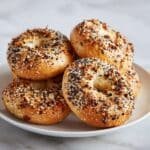
This classic New York Bagels recipe delivers authentic, chewy, and flavorful bagels with a perfectly crisp crust and dense interior. Featuring high gluten flour and a malt syrup boil, these bagels undergo a cold fermentation to develop a deep malty aroma, then are boiled and baked to golden perfection.
- Prep Time: 12 hours 5 minutes
- Cook Time: 20 minutes
- Total Time: 12 hours 25 minutes
- Yield: 8 bagels
- Category: Bread
- Method: Baking
- Cuisine: American
Ingredients
Dough Ingredients
- 500g high gluten bread flour
- 290g lukewarm water
- 2 tablespoon barley malt syrup
- 1.5 teaspoon instant yeast
- 2 teaspoon fine sea salt
Boiling Liquid
- 2 tablespoon barley malt syrup
- 1 tablespoon baking soda
Instructions
- Combine dry ingredients: Place 500g high gluten flour, 1.5 teaspoon instant yeast, and 2 teaspoon fine sea salt in your mixer bowl to start building the dough base.
- Add the liquids: Pour in 290g lukewarm water and 2 tablespoon barley malt syrup. Mix on low speed until a stiff, shaggy dough forms.
- Knead the dough: Knead the dough by machine for 10 minutes or by hand for 15 minutes until the surface becomes smooth and elastic, indicating proper gluten development.
- Initial Rest: Cover the dough and let it rest at room temperature for 1 hour, allowing it to relax and lightly expand.
- Portioning: Divide the dough into 8 equal pieces, about 100g to 110g each. Roll each piece into a tight, smooth ball to create uniform bagels.
- Shaping: Poke a hole through the center of each ball and gently stretch it to about 2 inches wide, forming the iconic bagel shape.
- Cold Fermentation: Place the shaped bagels on a parchment-lined tray, cover tightly, and refrigerate for 12 hours. This develops the complex malty aroma essential to New York style bagels.
- The Boil Prep: Bring a large pot of water to a boil, adding 2 tablespoon barley malt syrup and 1 tablespoon baking soda. The water will darken, resembling tea.
- Boiling: Boil the bagels in batches of 2 or 3 for 1 minute on each side until the surface becomes puffy and slightly wrinkled, which helps create the chewy crust.
- The Bake: Transfer boiled bagels to a lined baking sheet and bake in a preheated oven at 220°C (425°F) for 20 minutes until the crust is deep mahogany brown and sounds hollow when tapped, signaling they are perfectly baked.
Notes
- Using high gluten flour is critical for developing the characteristic chewy texture of New York bagels.
- Barley malt syrup in both the dough and boiling water imparts the classic malty sweetness and helps with crust color.
- The cold fermentation in the refrigerator allows flavors to deepen and results in a better texture.
- Boiling the bagels briefly before baking is essential for the glossy, chewy crust unique to authentic bagels.
- Ensure the dough balls are rolled tight to avoid holes closing during proofing.
- Baking temperature and time may vary slightly according to your oven; watch for a hollow sound when tapping the crust for doneness.


Leave a Reply