
Fresh chimichurri is one of those vibrant, herb-packed sauces that bring any dish to life. This Fresh Chimichurri Sauce Recipe shines with its bright, tangy flavors and is perfect whenever you want a fresh, zesty kick-like on grilled meats, roasted veggies, or even just slathered over crusty bread. I love making it when parsley and oregano are at their freshest because it truly makes the flavor pop.

Jump to:
Why This Recipe Works
The magic of this Fresh Chimichurri Sauce Recipe is how it balances fresh herbs, zippy vinegar, and a gentle heat from chili flakes-all combined in a silky olive oil base. It's both bright and comforting, delivering complex flavor with minimal effort.
- Consistent Texture: Finely chopping herbs by hand or pulse-processing gently gives a lively yet slightly chunky sauce.
- Deep, Balanced Flavor: Letting it rest brings all those sharp and herbal elements together in harmony.
- Simple Ingredients: Quality olive oil and bright, fresh citrus elevate the sauce gracefully without fuss.
- Fast Prep, Big Payoff: From chopping to serving in about 15 minutes-you'll love how quickly it comes together.
Ingredient Game Plan

Since Fresh Chimichurri Sauce Recipe relies heavily on herbs and olive oil, sourcing fresh, vibrant ingredients really pays off. I always pick parsley that's bright green with no wilting, and oregano that's fragrant-if using dried, the flavor won't be quite as fresh.
- Fresh flat-leaf parsley: Choose firm leaves free of spots; avoid curly parsley for better flavor and texture.
- Fresh oregano: If fresh is unavailable, a good-quality dried oregano works, but cut quantity in half.
- Garlic: Use firm, unblemished cloves; fresh garlic contributes a lively, sharp flavor.
- Extra virgin olive oil: Pick one with a fruity, peppery note to boost the sauce's richness.
- Red wine vinegar: Adds tang and complexity; look for smooth, not overly sharp versions.
- Red pepper flakes: Start light-the heat builds quickly depending on your flakes.
- Coarse salt: Enhances all flavors without watering down the sauce.
- Fresh lemon juice: Brightens the whole mix with natural acidity.
Quick Note: Exact measurements are in the printable recipe card at the bottom.
How to Cook Fresh Chimichurri Sauce Recipe
Step 1 - Prep & Season
Start by washing your parsley and oregano thoroughly, then pat them completely dry-excess moisture will dilute your sauce. Remove any thick stems to avoid bitterness, then finely chop the herbs with a sharp knife or give a few pulses in a food processor, careful not to overdo it; you want some texture, not a puree. Next, peel and mince garlic finely. I like crushing it lightly with a pinch of salt using my knife's flat side to create a smooth paste that evenly distributes flavor.
Step 2 - Build Flavor
In a medium bowl, mix your chopped herbs, minced garlic, red pepper flakes, and salt. This dry blend releases aromas that get you excited. Then, slowly whisk in olive oil, red wine vinegar, and fresh lemon juice. Adding the liquids gradually lets you keep control over the sauce's consistency-aim for a slightly chunky texture that clings beautifully to your food. You'll notice the vibrant colors brighten even more as the oil glossy coats the herbs.
Step 3 - Finish for Best Texture
After mixing, let your chimichurri rest at room temperature for at least 20 minutes. This resting time deepens the flavor and marries the sharp, herbal, and acidic notes beautifully. Resist the urge to add too much seasoning before the flavors meld-after resting, give it a taste and adjust salt or acid if needed. The texture should feel fresh and slightly coarse, never watery or mushy.
Pro Moves I Swear By
From my experience, a well-made chimichurri gets better the longer it rests. I like to prepare it in the morning for dinner and keep it covered at room temperature-it really rounds out the flavors. Also, resist blitzing your herbs too finely; a little texture provides that delightful rustic feel.
- Doneness Cue: When the herbs are evenly coated but still clearly visible and vibrant, your chimichurri is ready.
- Temperature Trick: Bring your olive oil to room temperature before mixing for better emulsification.
- Make-Ahead Move: This sauce keeps well for a day or two chilled, making it easy to prepare ahead.
- Skip This Pitfall: Avoid adding vinegar or lemon juice too early-adding them after herbs are chopped prevents wilting.
Serve It Up

Finishing Touches
Fresh Chimichurri Sauce Recipe works wonders spooned over grilled steak, chicken, or fish because it cuts through richness with its bright acidity. I also love using it as a marinade or a finishing drizzle on roasted potatoes-the fresh herbs and citrus lift every bite. The toasty olive oil adds a silky mouthfeel that makes you want to keep dipping.
Great Pairings
When serving chimichurri, I often pair it with charred corn, simple grilled veggies like bell peppers or zucchini, and crusty bread to soak up the sauce. A light salad with citrus notes complements the sauce's brightness. If you want more contrast, roasted sweet potatoes are fantastic alongside the fresh, herbal sauce.
Easy Plating Wins
For casual meals, just dollop chimichurri generously beside the main dish. For a fussier presentation, drizzle it artfully over sliced grilled meat served on a platter garnished with extra fresh herbs and lemon wedges. The green specks and vibrant orange-red pepper flakes make it look stunning with minimal effort.
Make-Ahead & Storage
Storing Leftovers
Store leftover chimichurri in an airtight glass container in the refrigerator. It keeps well for up to 4 days. You might notice the oil will solidify when chilled; just let it sit at room temperature a few minutes or gently stir before serving to restore its flowing texture.
Freezer Notes
Freezing chimichurri can dull its fresh herb flavor and change the texture, so I don't recommend freezing it. If you must, freeze in small portions in ice cube trays and thaw gently overnight in the fridge for the best possible result.
Reheating Fresh Chimichurri Sauce Recipe Without Drying Out
This sauce is best served cold or at room temperature. If you want to warm it slightly, I suggest briefly warming it in a small bowl set over hot water (double boiler style) rather than direct heat, to avoid drying out or cooking the herbs. Microwaving risks overcooking, so if you do, heat in 10-second bursts, stirring in between.
Frequently Asked Questions
You can, but flat-leaf parsley is preferred because it has a brighter flavor and better texture, offering a fresher chimichurri sauce.
The heat comes from red pepper flakes and is moderate. You can adjust the amount to your taste for more or less spice.
Not at all-it's fantastic on veggies, roasted potatoes, as a marinade, or even as a dipping sauce for bread.
I recommend chopping by hand or pulsing gently in a food processor to keep a nice fresh texture and avoid turning the sauce into a puree.
Final Thoughts
Making this Fresh Chimichurri Sauce Recipe is like unlocking a little herbaceous treasure every time. The freshness of parsley, brightness of vinegar and lemon, and gentle heat from the chili flakes combine into a harmonious punch of flavor that's surprisingly easy to nail. Don't be intimidated by chopping herbs finely; it's a simple step with a huge payoff. Whether you're throwing a casual cookout or just want to brighten up weeknight dinner, this chimichurri sauce will quickly become one of your favorite go-to condiments.
PrintComplete Recipe
Fresh Chimichurri Sauce Recipe
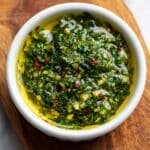
This fresh chimichurri sauce is a vibrant and tangy condiment made with finely chopped fresh herbs, garlic, olive oil, and a hint of red pepper flakes. Perfect for drizzling over grilled meats, vegetables, or using as a marinade, this sauce brings a burst of flavor that's quick and easy to prepare.
- Prep Time: 15 minutes
- Cook Time: 0 minutes
- Total Time: 15 minutes
- Yield: 1 cup
- Category: Sauce
- Method: No-Cook
- Cuisine: Argentine
- Diet: Gluten Free
Ingredients
Herbs
- 1 cup fresh flat-leaf parsley, finely chopped
- 2 tablespoons fresh oregano, finely chopped
Other Ingredients
- 4 garlic cloves, minced
- ½ cup extra virgin olive oil
- 2 tablespoons red wine vinegar
- ½ teaspoon red pepper flakes
- 1 teaspoon coarse salt
- 1 tablespoon fresh lemon juice
Instructions
- Prepare the herbs and garlic: Wash and thoroughly dry the fresh parsley and oregano. Remove thick stems and finely chop the herbs using a sharp knife or food processor, being careful not to over-process. Peel and mince the garlic cloves very finely. For a smoother texture, you can crush the garlic with a pinch of salt using the flat side of your knife blade.
- Combine dry ingredients: In a medium bowl, combine the chopped parsley, oregano, minced garlic, red pepper flakes, and salt. Mix well to distribute the ingredients evenly.
- Add liquids: Slowly whisk in the olive oil, red wine vinegar, and lemon juice until the mixture is well combined and has a slightly chunky consistency.
- Rest and adjust flavors: Let the chimichurri rest at room temperature for at least 20 minutes to allow flavors to meld. Taste and adjust seasoning as needed before serving.
Notes
- For a more mellow garlic flavor, let the sauce rest longer before serving.
- Use fresh, high-quality herbs for the best flavor.
- This sauce can be stored in an airtight container in the refrigerator for up to 3 days; bring to room temperature before serving.
- Adjust red pepper flakes to your preferred spice level.
- Chimichurri pairs excellently with grilled steaks, chicken, roasted vegetables, or as a dipping sauce.


Leave a Reply